Last Updated: November 14, 2026
Quick Summary
A thanksgiving over under bet is best evaluated by projecting the total yourself before checking the line. Estimate each team's possessions, convert them to points per possession against the specific defense, and add both sides. Bet only when your projection differs meaningfully from the market and the gap survives a check for injuries, weather and line movement.
- Estimate possessions for each team first, adjusting league-average pace for the matchup.
- Convert possessions to points using efficiency against the specific opposing defense.
- Record your projection before checking the market so you can review it honestly later.
- Treat a thin gap between your projection and the line as a reason to pass.
- Check wind, precipitation and stadium type, since the market has already seen the same forecast.
Table of Contents
- Why Thanksgiving Totals Behave Differently
- Projecting a Total From Pace and Efficiency
- Weather and Stadium Conditions on Scoring
- Reading Line Movement on Game Totals
- Using Historical Thanksgiving Trends With Caution
- Building an NFL Over Under Betting Strategy You Can Test
- Setting Your Next Thanksgiving Totals Bet
- Frequently Asked Questions
Why Thanksgiving Totals Behave Differently
Thanksgiving games carry a reputation for unusual scoring, but the historical evidence on the thanksgiving over under is thinner than most previews suggest. Sport Betting Edge models totals the same way across the week, and the Thanksgiving slate earns extra care because the sample is small and the venues vary. Small, venue-specific samples like these are better treated as context than as a rule.
The market also moves, and the number you can bet is not always the number the market started with. Understanding why a total moved is more useful than knowing where it was on a single day.
Projecting a Total From Pace and Efficiency
A game total is a forecast of combined points, and building your own projection is the clearest way to evaluate any thanksgiving over under line. Most previews hand you a number and a pick; the more useful skill is building your own number so you can tell whether the posted total is too high or too low. The method below is deliberately simple and repeatable, and it is the same sequence you can run on every Thanksgiving game before the lines settle.
The logic: points come from possessions, and possessions come from pace. Estimate how many possessions each offense will get, estimate how many points each offense will score per possession against the specific defense it faces, add the two sides, then compare your number with the market. A gap between your projection and the line is where you start looking for a bet, not where you finish.
Step 1: Estimate Expected Possessions
Start with each team's plays per game and adjust for the pace of the matchup. A fast offense facing a defense that also plays fast will generate more possessions than either team's season average suggests; two grind-it-out teams will generate fewer. Turnovers cut possessions, and a team that protects the ball denies its opponent short fields.
A practical shortcut is to start from a typical league-average number of possessions per team and nudge it up or down based on whether both teams trend toward high or low plays per game. Write the estimate down before you check the line. Recording your projection before you see the market keeps you honest when you review results later.
Step 2: Convert Possessions to Points Per Possession
Once you have possessions, convert them with efficiency numbers such as points per possession or points per drive. Red-zone efficiency matters more than raw yardage, because a team that moves the ball between the 20s but settles for field goals will score less than its yardage implies. Third-down conversion rate is a useful secondary check: teams that extend drives score more per possession.
Compare each offense's efficiency with the opposing defense's efficiency, not with league averages alone. The matchup determines the number. A top offense facing a bottom defense should be projected above its season average, and the reverse for a strong defense facing a weak offense.
Step 3: Add the Two Sides and Compare With the Line
Suppose your work gives the home team 11 possessions at about 2.4 points per possession (roughly 26 points) and the road team 11 possessions at about 2.0 (roughly 22 points). Your projected total is about 48. If the market sits at 44.5, your number is more than a field goal higher, which is the kind of gap worth investigating. If the market sits at 47.5, the edge is thin and the disciplined play is usually to pass.
That gap is a starting point, not a verdict. Before betting, check whether the difference is explained by something you missed, an injury, a weather forecast, or a line that has already moved. For a worked example with betting math, use the Edge expected value calculator at https://www.sportbettingedge.com/tools#expected-value to see whether your projection implies value at the price you can get. To convert the price itself, use the odds converter to read the implied win probability of any line. Edge runs this kind of projection across the slate and sends alerts by email and Telegram when a number looks off; see how the models work at https://www.sportbettingedge.com/models.
Watch out: projecting possessions and points per possession from season averages ignores short-term changes like a new starting quarterback or a coordinator change, so adjust for any role change that spans multiple games before you trust the gap.
The projection method comes down to three steps, summarised below.
| Step | What to do | Output |
|---|---|---|
| Estimate possessions | Start from league-average possessions and adjust for pace | Expected possessions per team |
| Convert to points | Apply points per possession vs. the specific defense | Expected points per team |
| Add and compare | Sum both sides and compare with the market line | Gap between projection and line |
| Verify the gap | Check injuries, weather and line movement before betting | Go or pass decision |
Weather and Stadium Conditions on Scoring
Cold, wind and precipitation can suppress passing and kicking, which tends to push totals down. The effect is real, but its size depends on how severe the conditions are and how much each team relies on the pass. A dome or a mild afternoon removes the adjustment entirely, so check conditions before you lean on weather at all. (Source: market efficiency in sports betting)
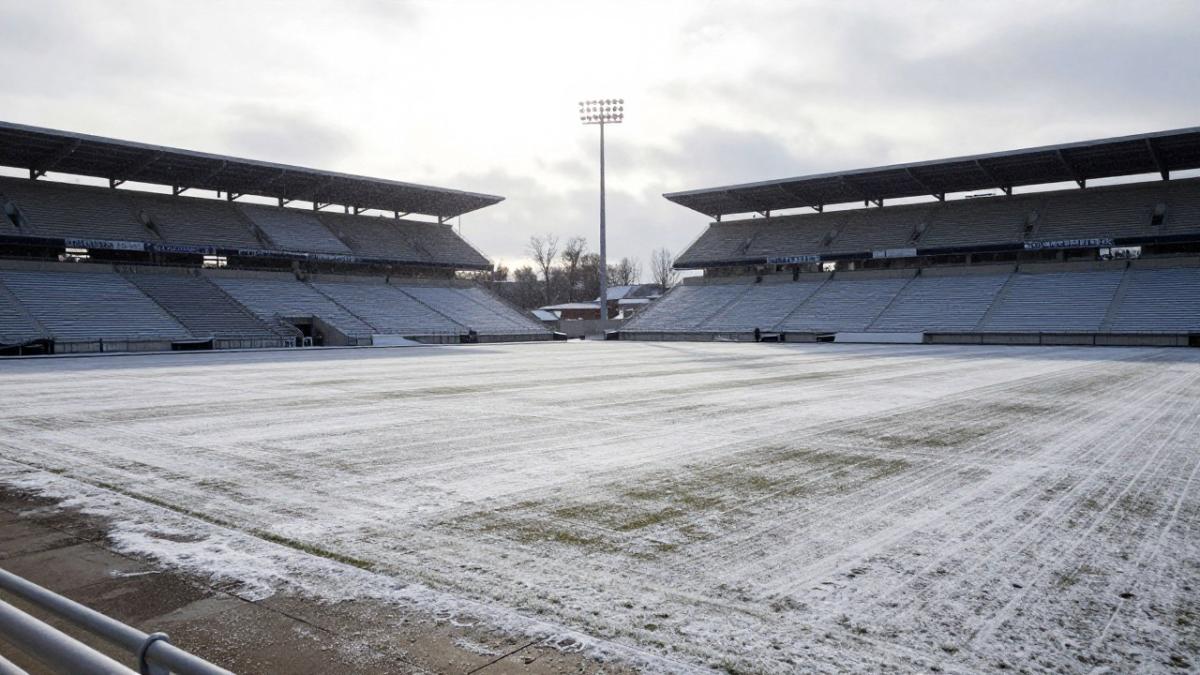
Use a short checklist rather than a gut feel:
- Wind: sustained wind above roughly 15 mph is the condition most associated with lower passing volume and accuracy; gusts matter more than the average. Kicking range and deep passing shrink first.
- Precipitation: steady rain or snow affects footing, ball security and deep throws. Light flurries usually matter less than the forecast implies; heavy, sustained precipitation is the case worth adjusting for.
- Temperature: extreme cold is often already priced in, but it can reduce deep passing and increase run-heavy game plans, which shortens the game and lowers possessions.
- Stadium type: domes and retractable-roof venues neutralize weather entirely. Outdoor stadiums in cold-weather cities carry the most risk, and wind tunnels created by stadium design can amplify a moderate forecast.
- Kickoff time: Thanksgiving games are spread across the afternoon and evening, so a forecast that looks mild at noon can change by the late game. Re-check the forecast close to kickoff.
Weather is also already in the number. Sportsbooks adjust totals when forecasts turn, so the question is whether the market has moved far enough, not whether conditions exist. Compare the forecast you are using with the forecast the line seems to reflect. If the total has already dropped several points on a wind forecast, the easy weather edge is likely gone.
Watch out: treating every cold-weather game as an automatic under ignores that the market has seen the same forecast, and a total that has already been bet down can offer no value even in bad conditions.
Reading Line Movement on Game Totals
Line movement tells you where money and information are flowing. A total that rises from 38.5 to 40 suggests bettors expect more scoring, and a drop suggests the opposite. Compare the opening number with the current one, then ask whether the move reflects new information such as an injury, a weather change or a shift in the public's side.
Timing matters. Bet early when your projection differs from a number you expect to move, and be cautious when the line has already absorbed the information you are relying on. Edge tracks movement across markets to spot prices the market has not fully adjusted; see how the models work at https://www.sportbettingedge.com/models.
Using Historical Thanksgiving Trends With Caution
Historical trends look compelling, but they are fragile. A trend that held in one stretch can reverse in the next, which is exactly what a small sample does. A pattern across a handful of games is consistent with chance, so do not build a bet on it alone.
Trends are most useful as a check on your model. If your projection says over and the history says under, that disagreement is worth investigating rather than a reason to ignore either side. For every graded pick Edge has published, the full public record is on the Records page at https://www.sportbettingedge.com/records. You can also review every NBA totals pick, logged and graded in public season by season.
Building an NFL Over Under Betting Strategy You Can Test
A strategy is only as good as its test. Write down your rules before the week begins: how you project totals, the minimum gap between your number and the line that triggers a bet, how much you stake, and when you skip a game. Then log every decision, including the ones you did not make.
Track results by bet, not by memory. Record the line you took, the closing number, your stake and the outcome. After enough games, compare your results against the closing line to see whether you consistently beat the number the market settled on. That comparison matters more than any single week. The NFL over under betting strategy you can defend is the one you have tested against your own log, not the one that felt right on a Sunday.
Size each bet with discipline. The Edge Kelly stake calculator at https://www.sportbettingedge.com/tools#kelly-stake shows how a stake scales with your edge and bankroll, and the no-vig odds calculator at https://www.sportbettingedge.com/tools#hold-novig-odds shows how much of a price is the sportsbook's margin.
Setting Your Next Thanksgiving Totals Bet
Before you place a Thanksgiving total, work through the sequence: project the possessions, convert them into points, compare with the current line, check the movement, and size the bet. If the gap is thin or the history and model disagree, pass.
If you are new to Edge, start with the Start Here guide at https://www.sportbettingedge.com/start-here for today's plays, how to log your bets and the free tools. Every plan begins with a 10-day free trial, so you can test the process on real games before committing.
Sports betting involves risk, and past results do not guarantee future results. Bet only what you can afford to lose.
Frequently Asked Questions
What are the best over-under bets for the NFL?
No single over or under is reliably best, because a total only pays off when the market price is wrong. A useful starting point is to compare your own projected score with the posted total and bet only where the gap is large enough to beat the vig. Some bettors assume public money tends to sit on the over in holiday games, but that is a tendency to test, not a rule. Track each bet with its line and price so you can see whether your method finds real value over time. Edge covers NFL totals in its model-based picks, and its Records page logs every graded pick.
How do injuries affect NFL game totals?
A key injury to a quarterback, a top receiver or a starting defensive back can move a total by a point or more, depending on the position and the backup's quality. Check the injury report close to kickoff, since the market usually adjusts quickly once designations are public. Compare the total before and after the news to see how much the market has already priced in. If the line has moved more than you think the injury justifies, the value may sit on the other side. Always confirm the final injury status before placing a bet.
Does a fast pace make an NFL game more likely to go over?
Usually yes, because more plays create more chances to score, but only if the teams also convert efficiently. A fast pace with poor third-down and red-zone rates may not produce many points. Estimate expected possessions for each team, then multiply by points per possession based on recent efficiency. Compare that projection with the posted total, and treat the result as one input rather than a guarantee. The NFL over under betting strategy works best when pace, efficiency and the line are all considered together.
